Credit freeze vs credit lock
One is a legal right. The other is a subscription with better marketing.
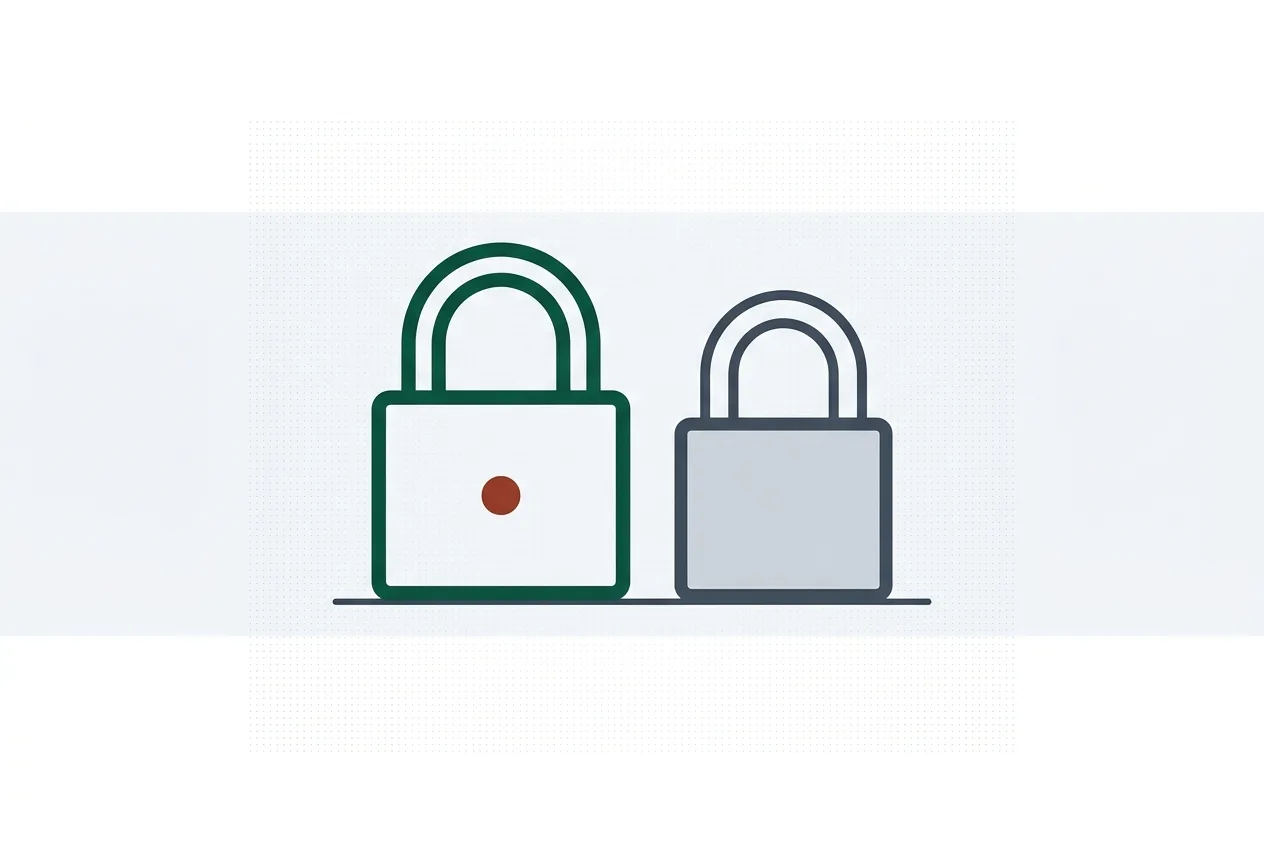
Both stop somebody opening a credit account in your name. The difference is what stands behind them.
A freeze is a right created by federal law. A lock is a product sold by a credit bureau.
Why free matters here
Freezes became free nationwide in September 2018, under the Economic Growth, Regulatory Relief and Consumer Protection Act. Before that, bureaus charged per freeze, per bureau, and often charged again to lift it.
Locks arrived and were marketed hard around the same period, frequently bundled into paid monitoring subscriptions. The bureaus were selling a convenience layer over a statutory right that had just been made free.
That is the piece the comparison articles written by the bureaus tend to underplay.
| Freeze | Lock | |
|---|---|---|
| Cost | Free, by law | Free at some bureaus, paid at others, often inside a subscription |
| Backed by | Federal statute | The bureau’s terms of service |
| Deadline to place | 1 business day online or phone | No statutory deadline |
| Deadline to lift | 1 hour online or phone | No statutory deadline |
| Can the terms change? | Only by Congress | Yes, by the company |
| Convenience | Slightly slower, PIN based | App toggle, instant |
The lock genuinely is more convenient. If that convenience is worth a monthly fee to you, it is a defensible purchase. Just buy it knowing that the underlying protection is available free, and that with a lock your recourse is a customer service queue rather than a legal right.
What a freeze actually does
It stops a credit bureau releasing your report to a new creditor. Since lenders will not approve an application without a report, the application fails.
That is the entire mechanism, and understanding it clears up most of the confusion.
Your existing accounts work normally. You can spend on your cards, pay them, and carry balances. A freeze touches new applications only.
Your existing lenders can still review you. Account reviews by companies you already do business with are not blocked.
Your score is unaffected. A freeze governs access to your report, not its contents.
You can still get your own reports. Pull them free at AnnualCreditReport.com whenever you like.
The real downsides
Not none, and worth knowing before you commit.
You must do it three times. Equifax, Experian and TransUnion are separate companies and a freeze at one does nothing at the others. All three or it is not a freeze.
You have to remember to lift it. Applying for a card, a phone contract, a rental, insurance in some states, or a job that runs a credit check all need it lifted first. Forget and the application simply fails, sometimes without the reason being obvious.
Keep the PIN safe. Losing it means an identity verification process to recover access, which is exactly as tedious as it sounds.
Some checks you would not expect need access. Utility connections and mobile contracts often pull credit, so a freeze can produce a confusing rejection when you are just trying to switch broadband.
None of that is severe. Lifting takes an hour online and can be temporary, or scoped to a single creditor, so you can leave it on permanently and thaw it when needed.
How to freeze all three
Each bureau, separately, online, in about ten minutes total. You will need identifying details and you will be issued a PIN or set up an account login. Store those somewhere you will actually find them again.
Federal law requires the bureau to place the freeze within one business day when you ask online or by phone, and to lift it within one hour by the same channels. If a bureau misses the lift deadline while you are mid application, that is a concrete failure worth a CFPB complaint.
While you are there, consider freezing with the lesser known agencies too if you want to be thorough. NCTUE, which handles telecoms and utilities data, and ChexSystems, which banks use for new account decisions, are the two that matter most.
What a freeze does not protect you from
This is the part that gets oversold, and believing it leads people to relax when they should not.
A freeze stops new credit accounts being opened using your credit report. It does nothing about:
- Account takeover of cards or bank accounts you already hold
- Tax refund fraud, filed with your Social Security number
- Medical identity theft, using your insurance
- Employment fraud, where someone works under your SSN
- Government benefit fraud
So a freeze is one strong layer, not a complete answer. If you already know your information was exposed, pair it with the identity theft block, which removes fraudulent entries already on your report within four business days.
The short recommendation
Freeze all three. It is free, permanent until you lift it, costs nothing in score or convenience most of the time, and rests on a statute rather than a contract.
Buy the lock only if you genuinely expect to be opening credit often enough that one hour of waiting is a real cost. For most people it is not.
Last verified
September 22, 2026. Freeze timing requirements come from the Fair Credit Reporting Act as amended by the Economic Growth, Regulatory Relief and Consumer Protection Act of 2018.
Common questions
Is a credit freeze or a credit lock better?
A freeze, for almost everyone. It is free by federal law, carries deadlines the bureaus must meet, and your rights do not depend on a company's terms of service. A lock is a product governed by a contract that can change.
Does freezing your credit hurt your credit score?
No. A freeze has no effect on your score at all. It controls who can open your report, not what is in it.
Can I still use my credit cards with a freeze on?
Yes. A freeze only blocks new credit applications. Existing accounts work normally, you can spend, pay, and your existing lenders can still review your account.
How fast can I lift a freeze?
Federal law requires the bureaus to lift it within one hour when you ask online or by phone. By mail it is three business days. You can lift it temporarily for a set period or for one specific creditor.
Can someone still steal my identity if my credit is frozen?
Yes, just not in this particular way. A freeze stops new credit accounts being opened using your report. It does nothing about existing account takeover, tax refund fraud, medical identity theft or misuse of your Social Security number for employment.
Does an Experian credit lock cover all three bureaus?
No. Each bureau only controls its own file, so a lock or a freeze at Experian does nothing at Equifax or TransUnion. Whichever tool you use, you have to set it up three times.
This article is general education, not legal or financial advice. Laws change and individual circumstances differ. Confirm anything time-sensitive with a licensed attorney or a nonprofit credit counselor before you act.