Credit utilization, and why the 30 percent rule is wrong
Paying in full every month does not mean your utilization reports as zero.
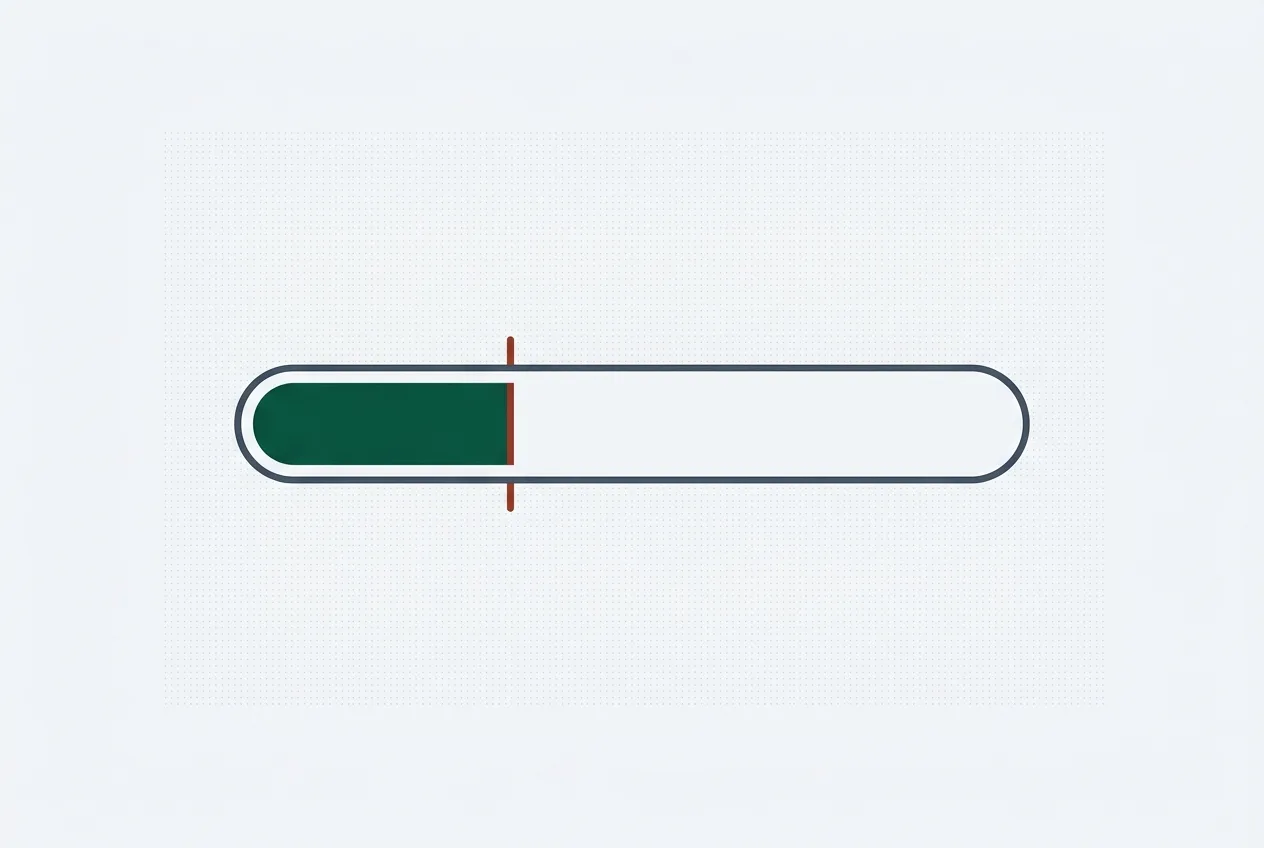
Utilization is roughly a third of your FICO score and it is the only major factor you can change in a month. Payment history takes years to repair. Account age cannot be rushed. Utilization resets every statement.
Which makes it worth understanding properly, because the version most people carry around is wrong in two expensive ways.
Where 30 percent came from
It is not a rule. No scoring model contains a 30 percent threshold, and nothing good happens the moment you drop below it.
The figure comes from generalised advice about where damage becomes clearly visible. Treating it as a target costs you points, because the relationship is continuous: 25 percent is better than 30, 10 is better than 25, and 3 is better than 10.
People with scores above 800 typically report utilization in the low single digits. Not because they cannot borrow, but because of how and when they pay.
There is no safe zone to sit inside. Every percentage point down is worth something, with the biggest gains coming as you move from very high to moderate, and smaller but real gains continuing all the way to near zero.
The statement date, which is the part that matters
This is the mechanical detail that explains why careful people still show bad utilization.
Your card issuer reports your balance to the bureaus as of the statement closing date, not the payment due date, and not the day after you pay.
So imagine a $5,000 limit. You spend $3,000 during the month and pay it off in full on the due date, as you always do. If the statement closed with $3,000 on it, your report shows 60 percent utilization, even though you carry no debt and pay no interest.
You did everything right and the report says otherwise.
The fix is timing. Pay most of the balance before the statement closes, not after. Find the closing date on your statement, pay it down a few days before, and let a small balance report. Your score moves within a cycle.
Why leave a small balance rather than zero
Reporting zero across every card occasionally scores slightly worse than reporting a small positive balance, because some models want evidence you are actually using credit.
The difference is small and not worth obsessing over. The practical approach: let one card report a small balance, a percent or two of its limit, and pay everything else down before their statements close.
Overall and per-card both count
Two numbers matter, and people track only the first.
Overall utilization is total balances across all revolving accounts divided by total limits.
Per-card utilization is each individual card’s balance against its own limit.
One maxed card can hurt even when your overall figure looks fine. Three cards with $10,000 limits each, $9,000 on one and nothing on the others, is 30 percent overall and 90 percent on that card. Models notice both.
If you are carrying a balance, spreading it across cards rather than maxing one is generally better for scoring, though it makes no difference to what you owe.
Quick reference
| Limit | 10% | 30% |
|---|---|---|
| $500 | $50 | $150 |
| $1,000 | $100 | $300 |
| $2,500 | $250 | $750 |
| $5,000 | $500 | $1,500 |
| $10,000 | $1,000 | $3,000 |
Raising your limits works too
Utilization is a ratio, so increasing the denominator helps just as much as reducing the numerator.
Many issuers will grant a limit increase on request, sometimes with only a soft pull. Ask whether it is a soft or hard inquiry before you agree, though even a hard one is a minor cost. How long hard inquiries affect your credit score explains why that trade is usually worth it.
The catch is obvious: a higher limit only helps if you do not spend into it.
Equally, do not close old cards. Closing one removes its limit from your total, and the same balances immediately represent a higher percentage. It also shortens your average account age over time.
Utilization has no memory
This is the good news, and it is genuinely unusual among credit factors.
Unlike a late payment, which sits on your file for seven years, utilization is only ever a snapshot of the most recent report. Carrying 80 percent for two years does no lasting damage once you bring it down. The next statement reports the new figure and your score reflects it.
That makes it the single most effective short-term lever available. If you are six weeks from a mortgage application, paying balances down before the statements close will do more for your score than any letter you could write.
Compare that with trying to get a collection removed, which is slower, less certain, and often not possible at all.
Last verified
October 2, 2026. Scoring factor weights are FICO’s published general guidance; exact treatment varies by model.
Common questions
What is a good credit utilization ratio?
Lower is better, all the way down. There is no threshold you sit safely under. People with the highest scores typically report in low single digits, and anything under about 10 percent is doing well. The often quoted 30 percent is not a target, it is a rough point past which damage becomes obvious.
Is 32 percent utilization bad?
It is not catastrophic, but it is costing you points you could get back quickly. Utilization has no memory, so bringing it down is reflected as soon as the next statement reports.
Does utilization matter if I pay my card in full every month?
Yes, and this surprises people. Issuers report your balance as of the statement closing date, not after you pay. So a card paid in full every month can still report 60 percent utilization if that is what the balance was when the statement cut.
Should I worry about one card being high if my total is low?
Somewhat. Scoring models look at both overall utilization and the highest individual card. One maxed card among several can cost you even when the total across all cards looks healthy.
Does closing a credit card hurt my utilization?
Yes. Closing a card removes its limit from your total available credit, so the same balances suddenly represent a larger percentage. That is one reason to keep old cards open even when you do not use them.
This article is general education, not legal or financial advice. Laws change and individual circumstances differ. Confirm anything time-sensitive with a licensed attorney or a nonprofit credit counselor before you act.